
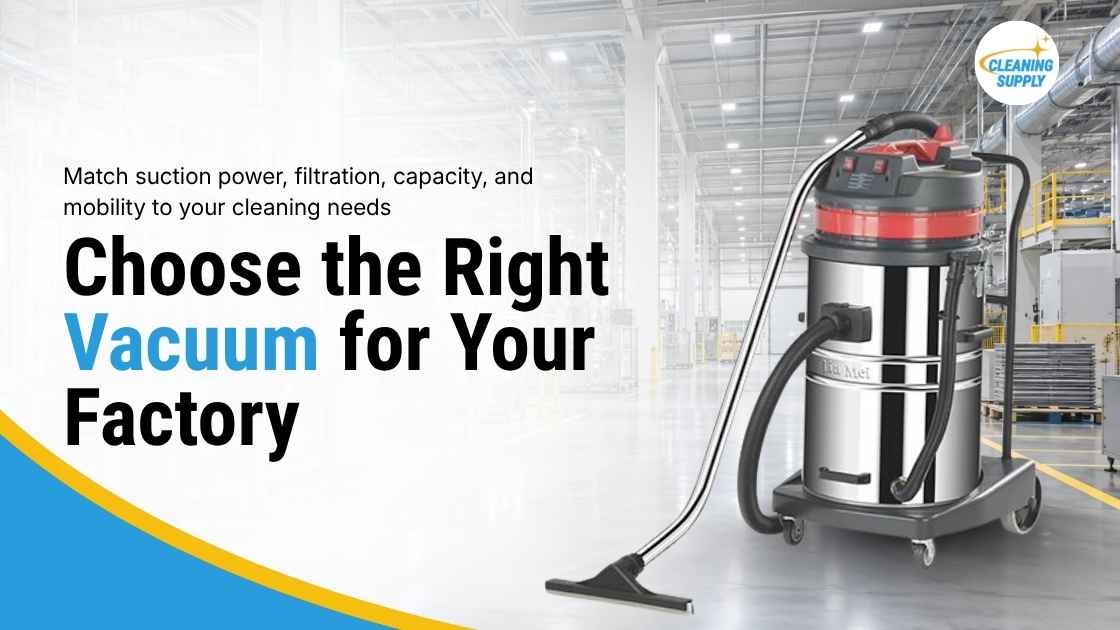
A vacuum for industrial cleaning is one of the most important pieces of equipment for maintaining a safe, productive, and efficient factory. Manufacturing facilities generate large amounts of dust, debris, metal shavings, wood particles, liquid spills, and other waste that standard commercial vacuums simply are not designed to handle. Choosing the right industrial vacuum helps improve workplace safety, protects valuable machinery, and reduces cleaning time, making it a worthwhile investment for businesses across many industries.
From food processing plants to automotive workshops and warehouses, every facility has different cleaning requirements. Understanding the essential features of an industrial vacuum allows businesses to select equipment that delivers reliable performance while supporting long term operational efficiency.
Why Choosing the Right Industrial Vacuum Matters
Factory environments are more demanding than commercial offices or retail spaces. Production lines often operate continuously, creating waste that can quickly accumulate if not removed efficiently. Dust and debris not only affect cleanliness but can also damage equipment, reduce air quality, and increase safety risks for employees.
Investing in the right industrial vacuum helps businesses maintain a cleaner workplace while reducing equipment downtime. Proper cleaning also extends the lifespan of machinery by preventing excessive dust buildup around motors, conveyors, and production equipment.
The right machine should match the type of debris generated, the size of the facility, and the frequency of cleaning. Instead of focusing only on motor power, businesses should evaluate several features that influence overall performance and reliability.
Essential Features Every Factory Should Look For
Each industrial environment has unique cleaning challenges, but several features consistently provide the greatest value across different industries.
Powerful Suction Performance
Strong suction is the foundation of any effective industrial vacuum cleaner. Factory waste often includes heavy dust, fine particles, packaging scraps, metal chips, and other difficult materials that require consistent suction power.
A vacuum with high airflow and strong suction removes debris more efficiently, allowing maintenance teams to clean production areas faster. Reliable suction also prevents leftover residue that may create slip hazards or interfere with manufacturing equipment.
Rather than comparing motor wattage alone, businesses should look at the overall cleaning performance, including airflow, vacuum pressure, and the machine’s ability to maintain suction during extended operation.
Advanced Filtration System
Factories frequently produce airborne dust that affects employee health and equipment performance. An advanced filtration system captures fine particles before they return to the surrounding environment.
High efficiency filtration becomes especially important for industries such as pharmaceuticals, electronics, woodworking, food manufacturing, and chemical processing. In these environments, controlling airborne contaminants supports both product quality and workplace safety.
Many industrial vacuum systems offer HEPA filtration, which captures extremely small particles and helps improve indoor air quality throughout the facility. According to the Occupational Safety and Health Administration (OSHA), using HEPA-filtered vacuum systems instead of dry sweeping can help minimize workers’ exposure to airborne dust in industrial environments, making effective filtration an important consideration when selecting an industrial vacuum.
After understanding the importance of suction and filtration, it becomes easier to compare the key features that contribute to overall cleaning performance.
| Feature | Benefit for Factory Operations | Recommended For |
| Powerful suction | Removes heavy debris quickly | Manufacturing and warehouses |
| Advanced filtration | Improves indoor air quality | Food, pharmaceutical, electronics |
| Large collection tank | Reduces downtime for emptying | High volume cleaning |
| Wet and dry capability | Cleans liquids and solids with one machine | Workshops and production facilities |
| Durable construction | Withstands demanding industrial use | Heavy duty environments |
| Easy maintenance | Reduces servicing time | Daily cleaning operations |
Large Collection Tank Capacity
Cleaning large facilities requires equipment that can operate efficiently without frequent interruptions. A larger collection tank allows operators to clean more areas before stopping to empty the container.
Factories that operate multiple production shifts often generate significant amounts of waste throughout the day. Choosing the appropriate tank capacity improves productivity because maintenance staff spend more time cleaning and less time servicing the equipment.
Tank size should always match the volume of debris generated within the facility rather than simply selecting the largest available model.
Wet and Dry Cleaning Capability
Many factories deal with both dry debris and liquid spills during normal operations. Purchasing separate machines for each cleaning task increases costs and requires additional storage space.
A wet and dry industrial vacuum provides greater flexibility by handling water, coolant, oil residue, dust, and solid waste with a single machine. This versatility makes the equipment suitable for automotive workshops, engineering facilities, manufacturing plants, and maintenance departments.
Businesses that perform different cleaning tasks throughout the day often benefit from this all in one solution because it simplifies daily operations.
Durable Construction
Industrial cleaning equipment must withstand demanding working conditions. Factory floors expose equipment to impacts, vibration, abrasive materials, and continuous movement across different work areas.
A durable industrial vacuum typically features stainless steel or reinforced polymer construction, heavy duty wheels, industrial grade hoses, and strong connectors. These components help extend equipment lifespan while reducing repair costs over time.
Investing in a well built machine often delivers better long term value because it requires fewer replacements and performs consistently under challenging conditions.
Easy Mobility
Large manufacturing facilities require cleaning equipment that can move easily between production lines, storage areas, loading bays, and maintenance workshops.
Industrial vacuums with ergonomic handles, stable wheels, and compact designs improve operator efficiency. Easy mobility reduces physical strain while allowing staff to clean larger areas without unnecessary interruptions.
Some facilities may also benefit from battery powered models, especially where access to electrical outlets is limited or where long power cords create obstacles.
Simple Maintenance and Serviceability
Routine maintenance plays a significant role in keeping industrial cleaning equipment operating efficiently. Machines designed with accessible filters, removable tanks, and easy to replace components reduce maintenance time and lower operating costs.
Businesses should also consider the availability of spare parts and professional servicing before purchasing an industrial vacuum. Reliable after sales support helps minimize downtime when maintenance becomes necessary.
Working with a supplier that offers equipment servicing, preventive maintenance, and replacement parts provides additional confidence throughout the machine’s lifecycle.
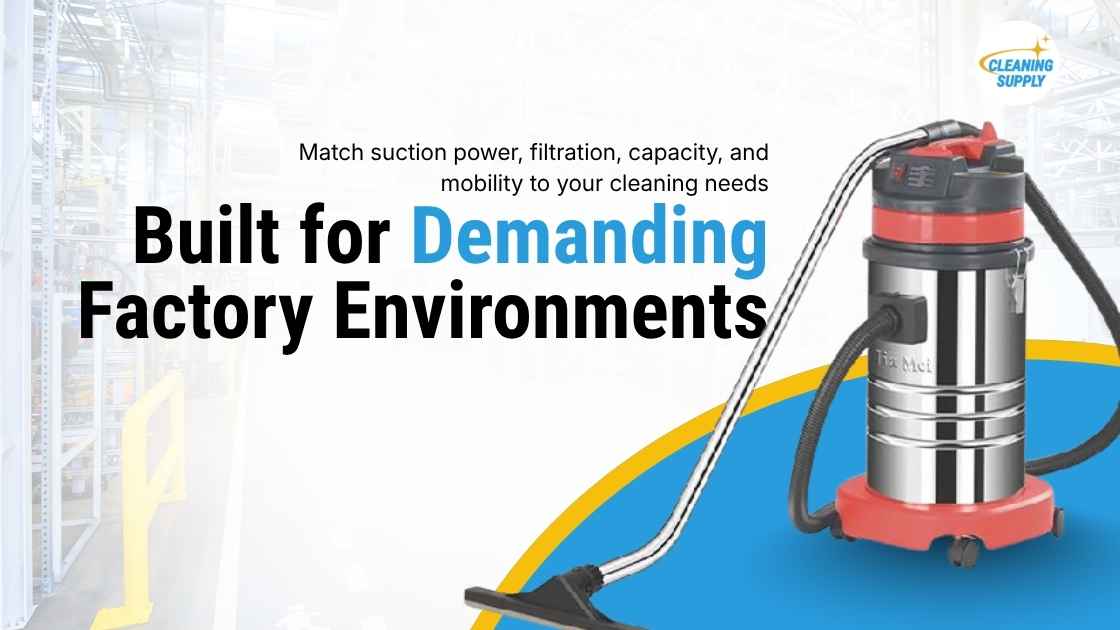
How to Choose the Right Industrial Vacuum for Your Factory
Selecting the right equipment involves more than comparing product specifications. Businesses should first evaluate their cleaning requirements before making a purchasing decision.
Consider these questions before selecting an industrial vacuum:
- What type of debris does your factory produce most often?
- Will the machine need to collect both dry waste and liquids?
- How many hours will the vacuum operate each day?
- Does your facility require HEPA filtration for fine dust control?
- Is after sales servicing and spare parts support available?
- Will the equipment need to move between multiple production areas?
Answering these questions helps businesses identify the features that matter most while avoiding unnecessary investment in functions they may never use.
Why After Sales Support Is Just as Important as Product Features
Even the most durable industrial vacuum requires periodic maintenance to deliver reliable performance. Choosing a supplier that provides technical support, servicing, and replacement parts helps businesses maximize their investment.
Professional servicing reduces unexpected equipment failures and extends machine lifespan. Maintenance contracts can also simplify equipment management by ensuring routine inspections occur before performance issues develop.
For businesses with temporary cleaning requirements, equipment rental services provide another practical option. Renting allows companies to handle seasonal demand or short term projects without purchasing additional machines.
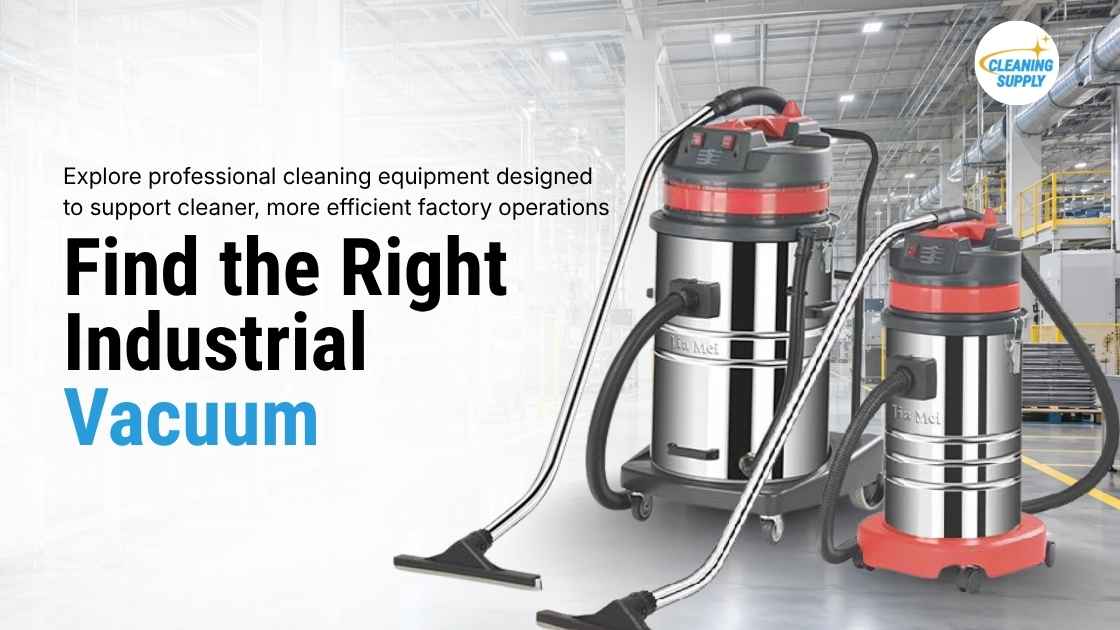
Find the Right Industrial Vacuum for Your Business
Every factory has unique cleaning challenges, which is why selecting the right industrial vacuum requires more than simply comparing specifications. By considering factors such as suction performance, filtration, durability, tank capacity, and maintenance support, businesses can invest in equipment that improves productivity while maintaining a safer working environment.
At GreenMech Supplies, we provide a wide range of industrial cleaning equipment designed to meet the needs of different industries. Whether you are looking for a reliable vacuum for industrial cleaning, equipment servicing, or expert advice on selecting the right solution, our team is ready to help you find equipment that supports your daily operations and long term business goals.